How Authentic Whiskey Barrels Are Made
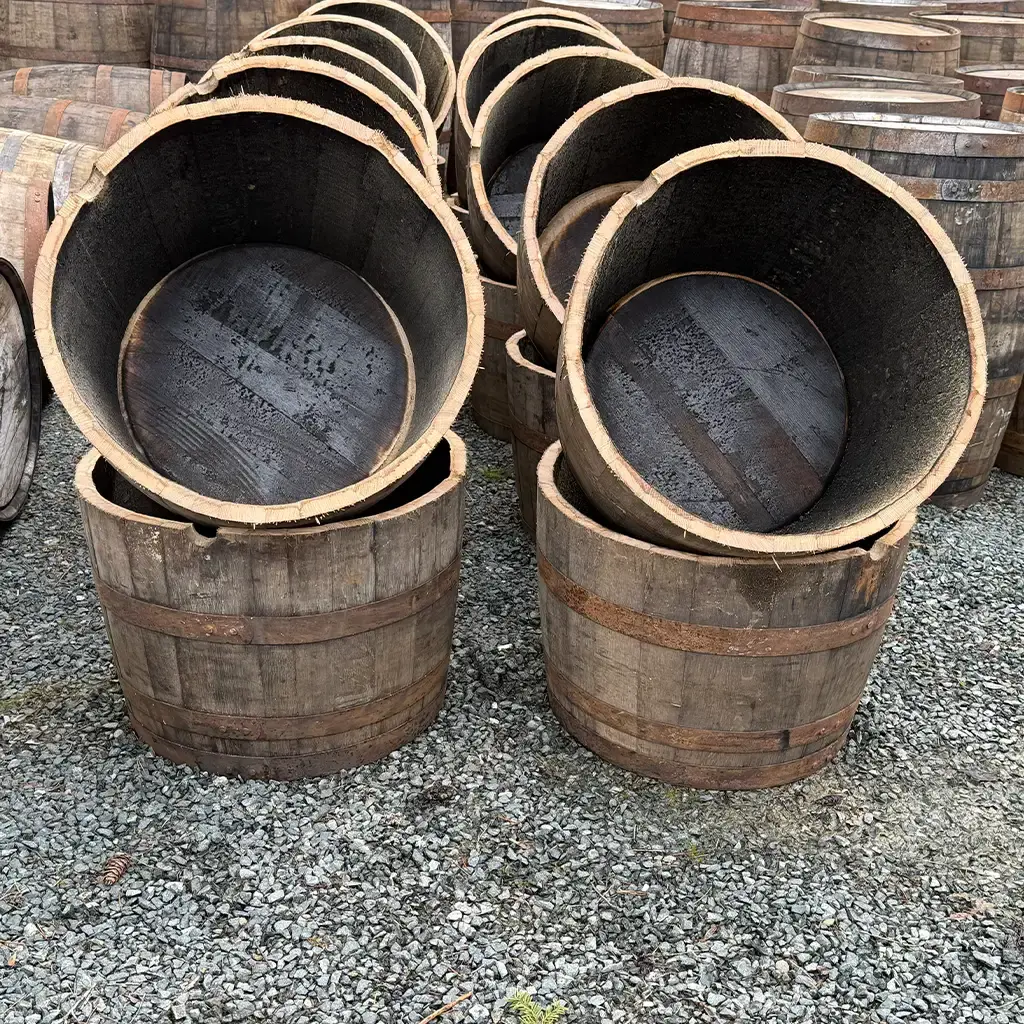
A whiskey barrel is not complicated. It is white oak, iron hoops, fire, and a lot of patience. No glue, no screws, no synthetic anything. People have been building them this way for hundreds of years, and the process has not changed much.
It Starts With the Wood
American white oak is the only species used for bourbon barrels. It grows across the eastern United States, mostly in Missouri, Kentucky, and the Ozarks. The wood has a tight grain with natural compounds called tyloses that make it watertight. That is why coopers chose it centuries ago and why nothing else has replaced it.
The logs are quarter-sawn into rough staves. Quarter-sawing wastes more wood than flat-sawing, but it keeps the grain oriented so liquid cannot seep through. After cutting, the staves get stacked outdoors and left to air-dry for anywhere from 18 to 36 months. Rain, sun, freeze-thaw cycles. All of it breaks down harsh tannins and mellows the wood naturally.
Shaping the Staves
Once seasoned, the staves are planed down to a precise taper. Each one is wider in the middle and narrower at the ends. That taper is what gives a barrel its iconic bulge. A standard 53-gallon bourbon barrel uses around 31 to 33 staves, and every single one has to fit tight against its neighbour with no gaps.
Raising the Barrel
The staves get stood up inside a temporary metal hoop, fanned out like a flower. This is called "raising." Then the whole thing goes over a fire or into a steam chamber to heat the wood so it bends without cracking. As the staves soften, a cable winch or hydraulic press draws them inward at the open end. More hoops get hammered on to hold the shape. No adhesive. The pressure of the hoops and the geometry of the staves is all that holds it together.
Charring
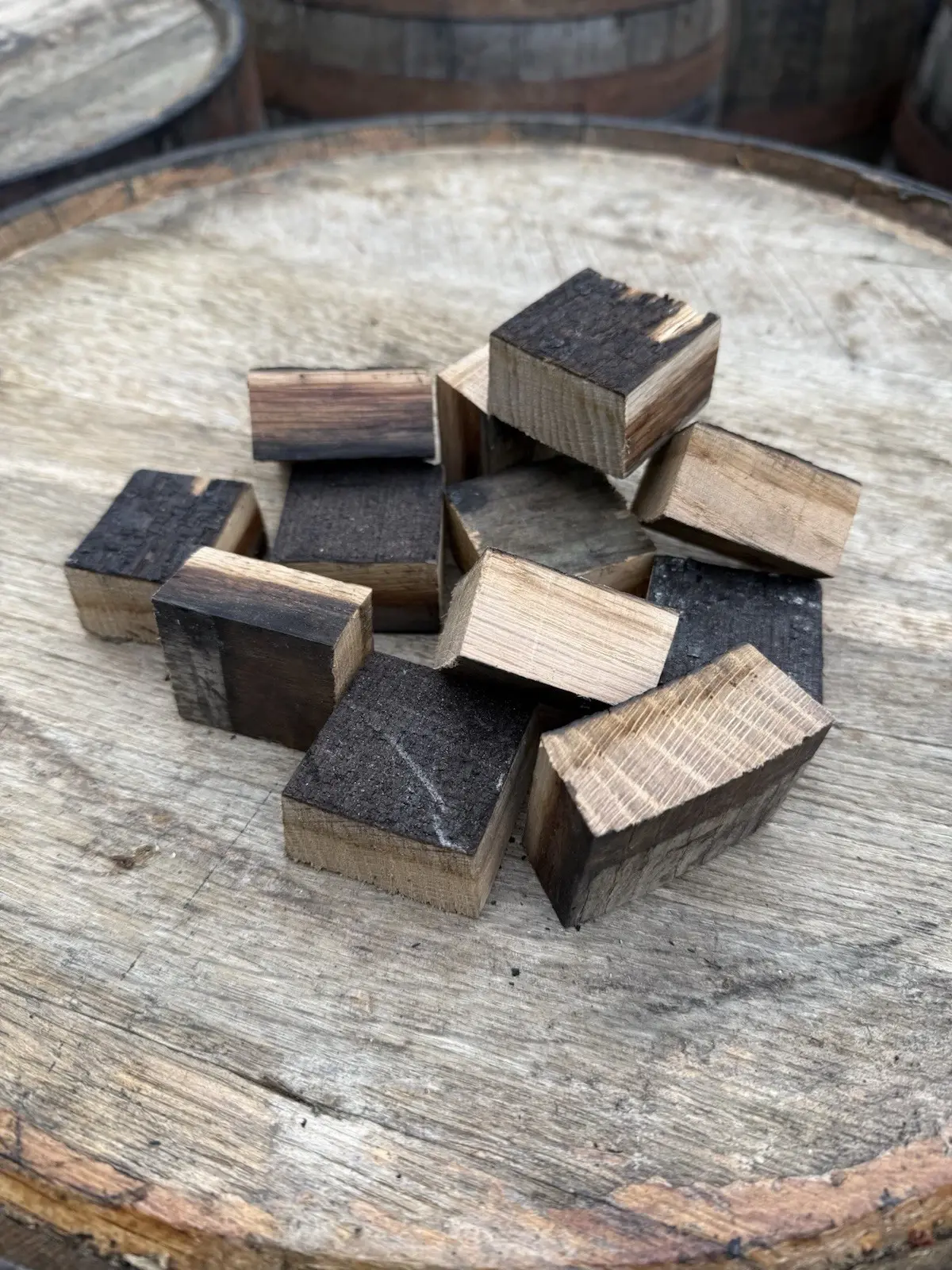
This is the step that separates a whiskey barrel from every other kind of barrel. The assembled cask gets flipped over an open flame and the inside is burned. Depending on the distillery's specs, the char level runs from 1 (about 15 seconds of flame) to 4 (around 55 seconds, sometimes called "alligator char" because of the deep cracked texture it leaves).
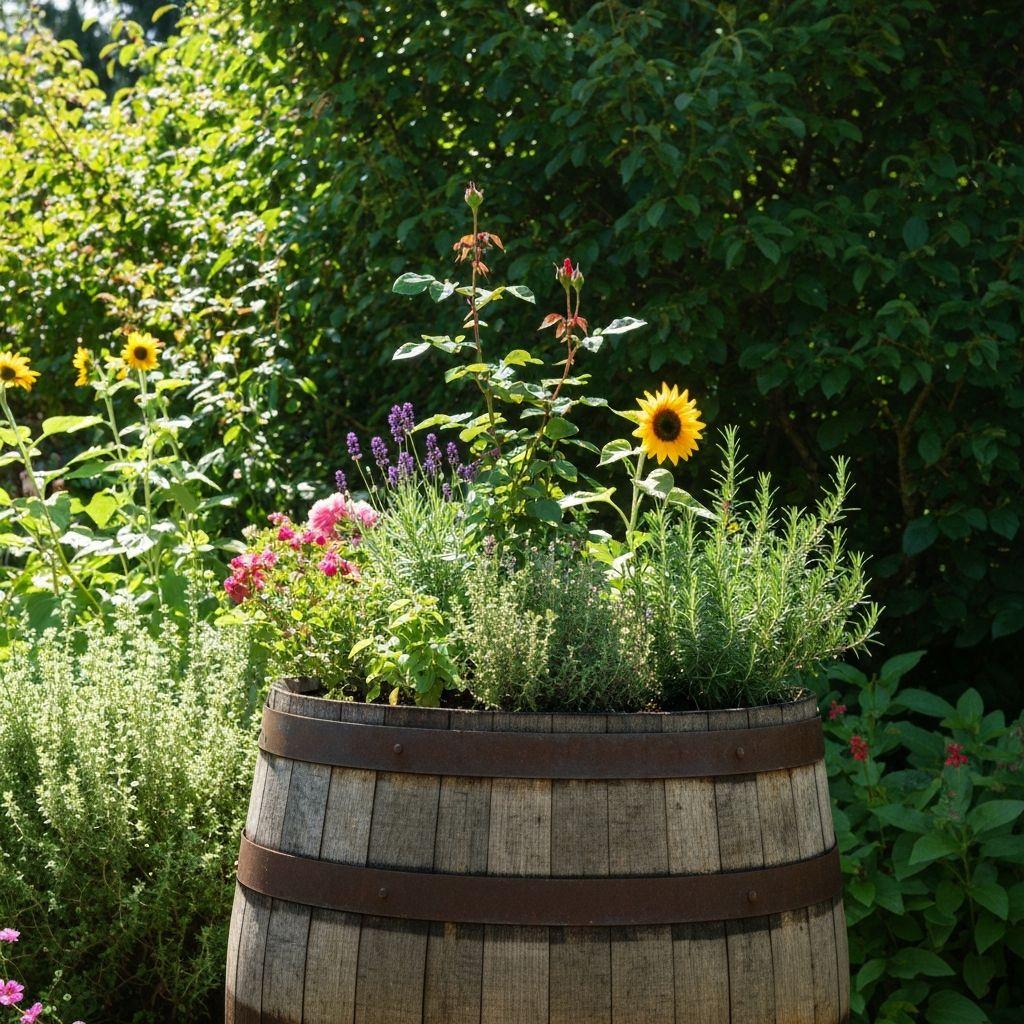
Most bourbon producers use a level 3 or 4 char. The fire does two things. First, it caramelizes the sugars in the wood, creating a layer of toasted oak that gives bourbon its vanilla and caramel notes. Second, it creates a band of activated carbon just under the surface that filters the spirit as it ages. That carbon layer also happens to make the wood resistant to rot, mould, and insects, which is a big reason these barrels hold up so well outdoors long after their distillery life is over.
Heads, Bung, and Testing
The flat circular ends of the barrel are called heads. They are made from shorter oak pieces edge-joined with dowels and sealed with cattail reed or flour paste along the groove where they sit in the stave ends. A bung hole is drilled into one stave near the middle of the barrel for filling and emptying. Once assembled, the barrel gets filled with water or air-pressure tested to check for leaks.
After the Distillery
By U.S. law, bourbon must be aged in new charred oak barrels. That means every bourbon barrel only gets used once for its original purpose. After one or more fill cycles (some get reused for other spirits), the barrel is retired. That is where we come in. We source retired Kentucky bourbon barrels and bring them to Vancouver Island.
By the time you pick one up from us in Errington, it has already lived a full life. The char is deep and established. The staves are seasoned by years of temperature swings inside a rickhouse. The hoops have started to patina. It is a genuinely built thing with real history, and it is ready for whatever you want to do with it next.
Check out our barrel selection or get in touch if you have questions.